Trends · Cixur Team · October 27, 2026 · 7 min read
Spotting New Etsy Shops and Trends Early
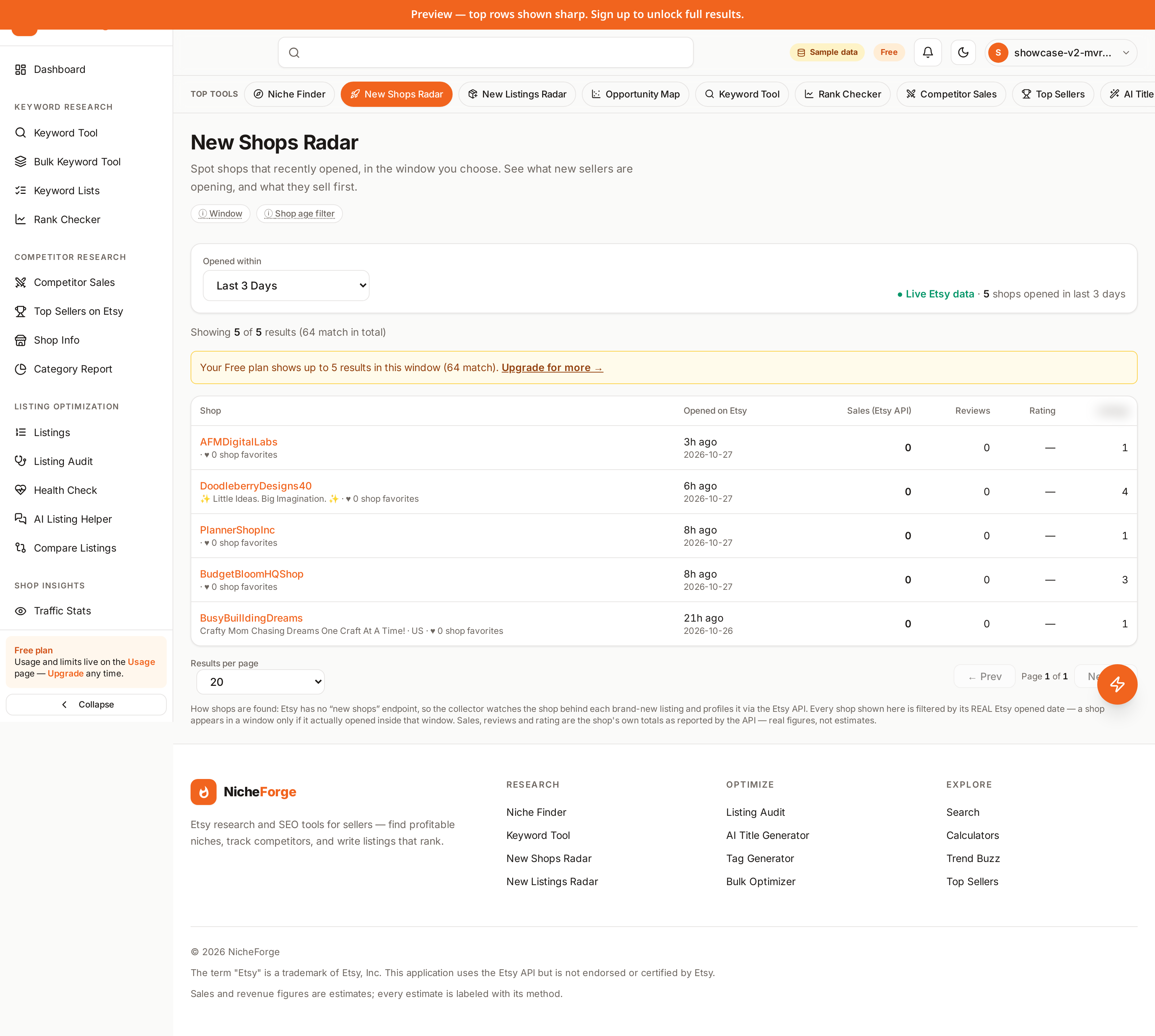
By the time everyone agrees something is trending, the opportunity has usually narrowed. The first sellers in a rising niche get the early favorites, the early reviews, and the early search positions — and later arrivals compete against them. Spotting new shops and trends early is therefore one of the highest-value habits a seller can build. It does not require prediction or luck. It requires watching the right feeds, reading them correctly, and acting while there is still room. This guide shows how.
Why early beats big
A trend's value is highest when few sellers serve it and buyers are just discovering it. At that stage, a good listing can rank with modest traction, because there is little to outrank. As more sellers arrive, the same listing needs far more favorites and reviews to hold its place. Early movers also learn faster: their listings collect real buyer feedback — questions, favorites, requests — while competitors are still deciding whether the trend is real. Early does not mean reckless, as the later sections explain. It means informed and prompt: you act on evidence others have not yet noticed, and you keep checking that the evidence holds.
What new shops tell you
New shops are a leading signal. When many shops open in a similar corner in a short window, sellers are betting that buyers are heading there. Study what those shops sell first: their opening listings reveal what newcomers believe is worth trying. Study how they present themselves: their shop titles, their first photos, the price points they choose. You are not copying them — you are reading the market's newest bets, before those bets have results.
The New Shops Radar collects recently opened shops in the window you choose, so you can scan fresh arrivals regularly instead of stumbling on them by chance. Pay special attention to clusters: several new shops in one niche, in one window, is a stronger signal than a single shop alone. A lone shop may be one person's idea. A cluster is a movement.
What new listings tell you
New listings are the other half of the picture. Shops that already exist reveal their bets through what they list next. A wave of fresh listings around one theme — a style, an occasion, a material, a personalization option — tells you where experienced sellers are placing their attention. Because the New Listings Radar places listings by their original creation date, you can trust that what you see as new genuinely is new, not a renewed older listing resurfacing.
Read fresh listings the way you read new shops: what theme repeats, what price points appear, what photos and titles do the new listings use, and what do their early favorites suggest about buyer response? A theme that appears in many new listings and starts gathering favorites quickly deserves a place on your shortlist for deeper research in the Niche Finder.
Telling a real trend from a spike
Not every burst of activity is a trend. A spike is sudden, narrow, and often tied to a single event — a viral post, a celebrity moment, a holiday week. A trend builds: it appears in new shops and new listings over several windows, it spreads across related phrases rather than one exact product, and buyer signals like favorites and reviews grow with it rather than flashing once and fading.
Test a candidate trend with three questions. Does it persist across more than one time window? Does it appear in more than one form — different products, different price points, different seller styles? Does it connect to a durable buyer need — an occasion that recurs, a problem that persists, a style people live with — rather than a moment that passes? Trends that answer yes to all three deserve your time. Spikes that fail the test deserve a note and a later re-check, not a shop built around them. The Trends views help here, showing which niches and keywords carry momentum over time rather than in a single burst.
The weekly early-spotting routine
Early spotting works best as a short routine, not a marathon. Once a week, set aside a focused session. First, scan the New Shops Radar for clusters in niches adjacent to yours. Second, scan the New Listings Radar for repeating themes in fresh listings. Third, check Trends for rising keywords and niches, and note which ones also appeared in your radar scans — agreement between feeds is a strong signal. Fourth, score the most promising candidates in the Niche Finder and check their categories in the Category Report. Write down two or three candidates and one reason each earned its place. The whole routine fits in a single sitting, and it keeps you close to the market without consuming your selling week.
Acting while there is still room
Spotting is only half the value; the other half is acting. When a candidate passes your checks, move in stages. First, validate demand and competition properly, as described in our demand-versus-competition guide, and run the money side through the Calculators. Second, list small: a focused set of listings with researched titles and tags from the Keyword Tool, clear photos, and honest descriptions. Third, watch the response closely for the first weeks — favorites, questions, and views tell you whether the trend is carrying your listings or passing them by. If the response is warm, expand the range. If it is flat, you have spent little and learned much, and your weekly routine will surface the next candidate.
Timing matters in one more way: seasonal trends reward sellers who list before the peak, so their listings have traction when buyers arrive in force. If your spotting routine flags a seasonal theme early, treat the lead time as part of the opportunity and prepare during the quiet weeks.
Watching adjacent niches
Some of the best early signals sit just beside your own niche. A style that takes off in home decor may migrate to weddings, then to gifts, then to party supplies — and sellers who watch adjacent niches catch the migration at each step. When your weekly routine surfaces a rising theme, ask where else it could apply: a different occasion, a different recipient, a different room, a different material. Adjacent niches are also safer testing grounds than faraway ones, because your existing skills, suppliers, and photography style usually transfer. A shop that grows by stepping into neighboring niches, one careful step at a time, builds a range that feels coherent to buyers instead of scattered.
Staying honest about what is early
Early signals are, by nature, thin. Resist the urge to over-claim what they mean. A cluster of new shops is evidence of seller interest, not proof of buyer demand — confirm it with favorites, reviews, and steady activity before you commit deeply. An Estimated sales figure is an estimate, labeled with its method, not a sales record. And a trend that looked strong last month may cool; your routine exists precisely so you notice cooling early too, and shift attention without drama. Honest reading protects you twice: it keeps you from chasing spikes, and it keeps you from clinging to trends that have passed.
Conclusion
The sellers who spot trends early are not fortune-tellers. They watch new shops and new listings on a regular rhythm, they separate real trends from spikes with simple tests, and they act in small, measured steps while there is still room. Build the weekly routine, trust the combination of signals over any single one, and let early evidence — honestly read — guide your next move. The market rewards those who arrive prepared, and preparation starts with watching what is new.
Try it free — open the New Shops Radar and the New Listings Radar today.
Get started free →The term "Etsy" is a trademark of Etsy, Inc. This application uses the Etsy API but is not endorsed or certified by Etsy.
More from News
- How to Find a Profitable Etsy Niche: A Beginner's Guide (Niche Research · 7 min)
- Etsy Keyword Research: Choosing Keywords That Match Buyers (Keyword Research · 6 min)
- Reading Demand vs Competition for an Etsy Niche (Niche Research · 6 min)
- Etsy Listing SEO Checklist: Titles, Tags, Descriptions (Listing SEO · 6 min)